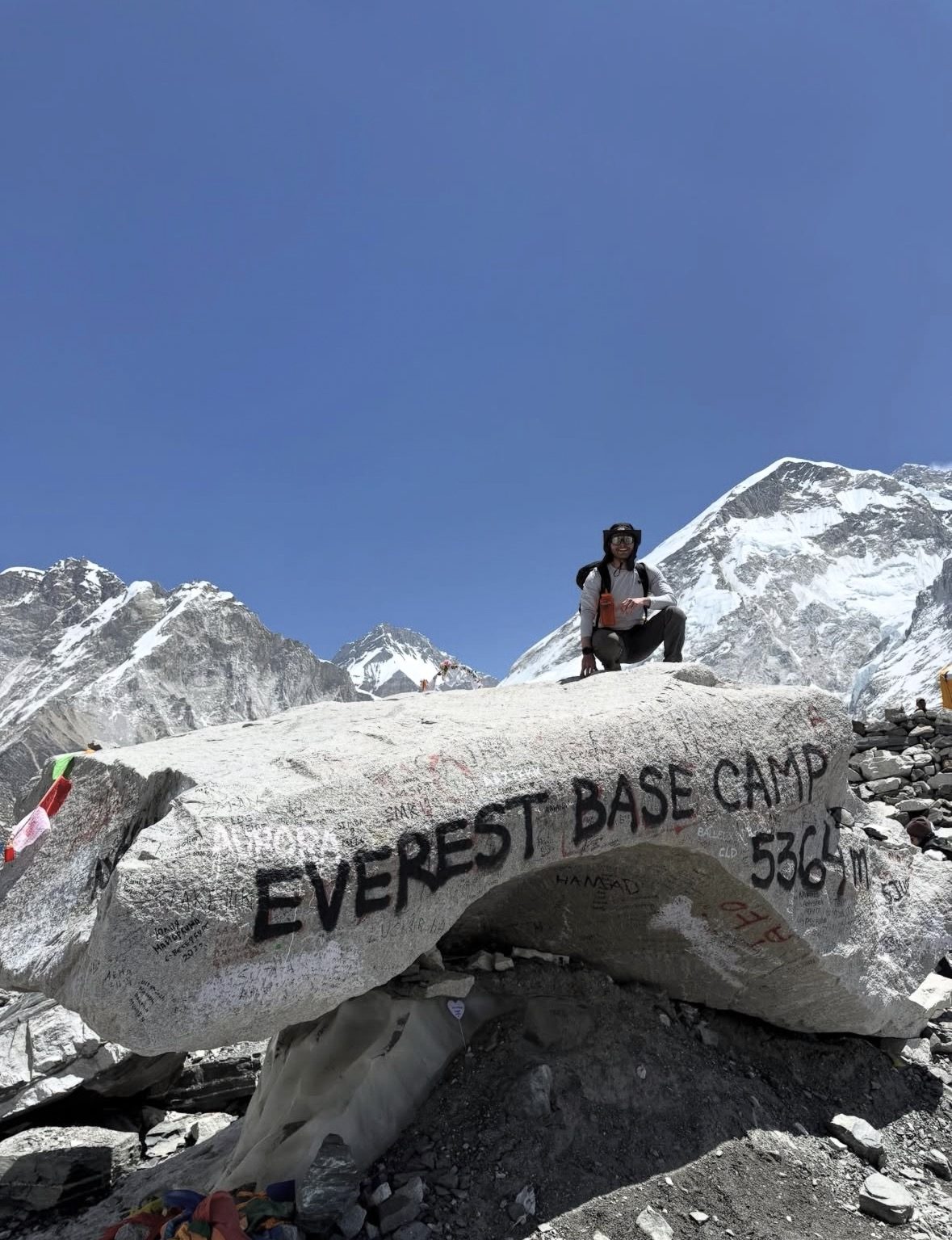
From daring experimental flights over the world's highest peaks to a thriving modern tourism industry, the story of helicopter tours to Everest Base Camp is one of human ambition, technological triumph, and awe-inspiring adventure. Understanding this history deepens every moment spent hovering above the Khumbu Glacier at 5,364 metres above sea level.
The story of helicopter tours to Everest Base Camp begins with the earliest attempts to conquer the Himalayan skies. Before any rotary-wing aircraft dared approach the world's highest mountain, fixed-wing planes conducted reconnaissance surveys of the region in the 1930s. The Houston Mount Everest Expedition of 1933 made history when two biplanes, a Westland PV-3 and a Westland Wallace, became the first aircraft to fly over the summit of Mount Everest on April 3, 1933. These pioneering flights, though not helicopters, established the foundational proof that aviation could operate in the extreme altitude and unpredictable weather conditions that define the Everest region of northeastern Nepal.
Helicopter activity in the Everest region began taking shape in the post-World War II era, when rotary-wing technology advanced sufficiently to operate at high altitudes. The Swiss Foundation for Alpine Research supported early Himalayan expeditions in 1952, laying groundwork for logistical aviation support. By the time Sir Edmund Hillary and Tenzing Norgay Sherpa made their historic first ascent of Everest on May 29, 1953, the global spotlight on the Khumbu region ignited enormous interest in accessing this remote landscape. Military and rescue helicopter operations gradually introduced rotary-wing aircraft into Nepal's mountain infrastructure throughout the 1960s, planting the seeds for what would eventually become a thriving commercial tourism industry.
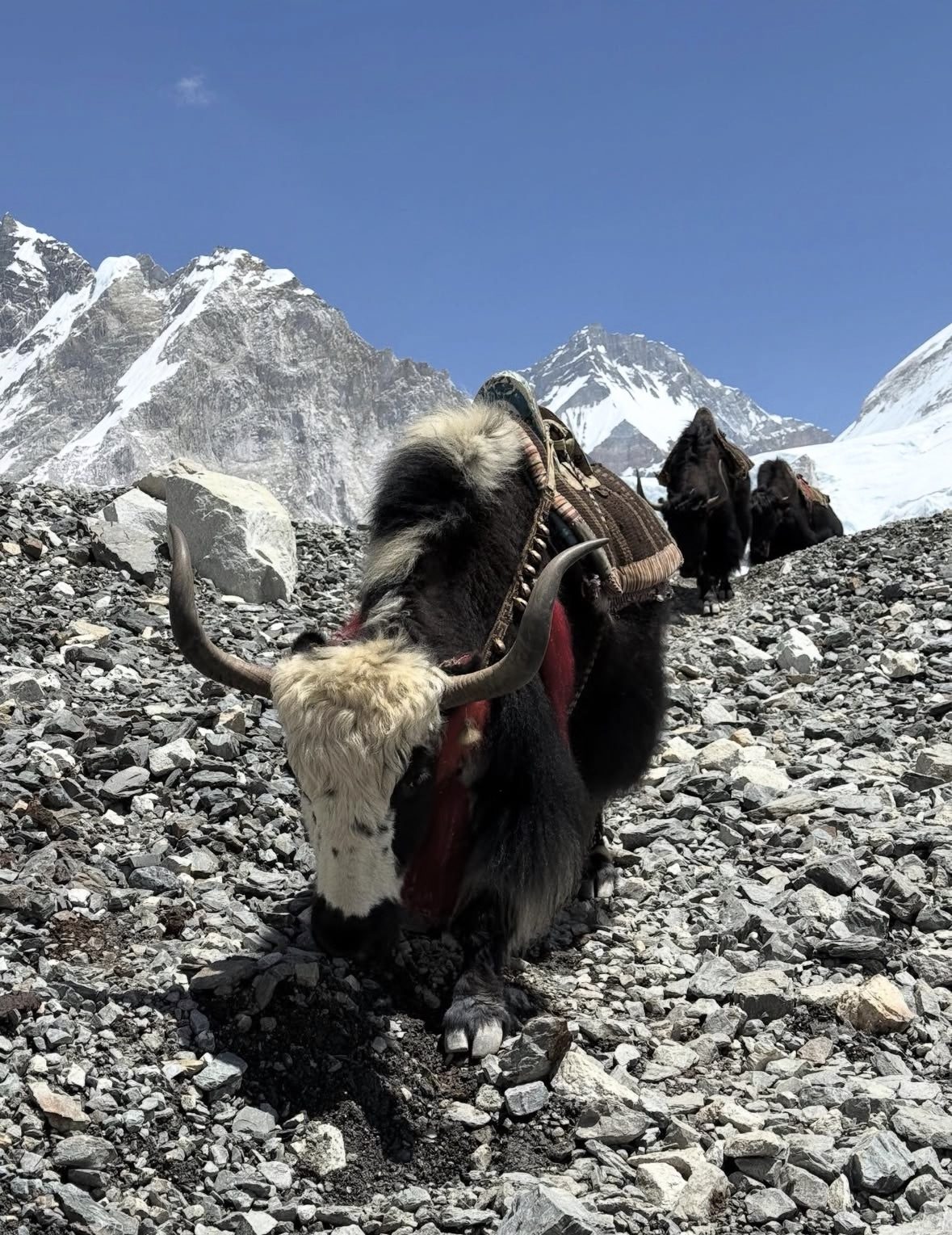
No history of Everest Base Camp helicopter tours is complete without acknowledging the Sherpa people, whose culture, knowledge, and labor have been inseparable from all human activity on and around Everest. The Sherpas, a Tibetan ethnic group who migrated to the Solukhumbu region of Nepal approximately 500 years ago, possess an extraordinary physiological adaptation to high altitude. Their deep spiritual connection to Chomolungma — their sacred name for Everest, meaning 'Goddess Mother of the World' — has shaped the ethical and cultural framework within which all tourism, including helicopter tours, now operates. Sherpa guides, pilots trained in Kathmandu, and local communities all remain central to the modern helicopter tour experience.
The establishment of Sagarmatha National Park in 1976, which achieved UNESCO World Heritage Site status in 1979, fundamentally shaped how helicopter tourism evolved in the Everest region. The park encompasses 1,148 square kilometres of dramatic landscape including Everest, Lhotse, and Cho Oyu, three of the world's fourteen eight-thousanders. UNESCO recognition brought international conservation scrutiny and governance frameworks that obligated Nepal's Civil Aviation Authority to develop regulated flight corridors and operational guidelines for aircraft entering the park's airspace. This institutional scaffolding ensured that as helicopter tourism grew through the 1990s and 2000s, it did so within a framework designed to balance visitor access with environmental and cultural preservation.
Buddhist monasteries, particularly the revered Tengboche Monastery founded in 1916 and rebuilt after a 1989 fire, serve as profound cultural landmarks visible during helicopter tours. Tengboche, situated at 3,867 metres and home to the famous Mani Rimdu festival each November, represents the spiritual heartbeat of the Khumbu valley. Helicopter tour operators increasingly recognized that including cultural overflights and landing opportunities near these sacred sites enriched the visitor experience immeasurably. The juxtaposition of cutting-edge aviation technology against centuries-old Sherpa monasteries, yak herding trails, and ancient trade routes to Tibet creates the layered, historically resonant experience that distinguishes an Everest helicopter tour from any other aerial adventure on earth.
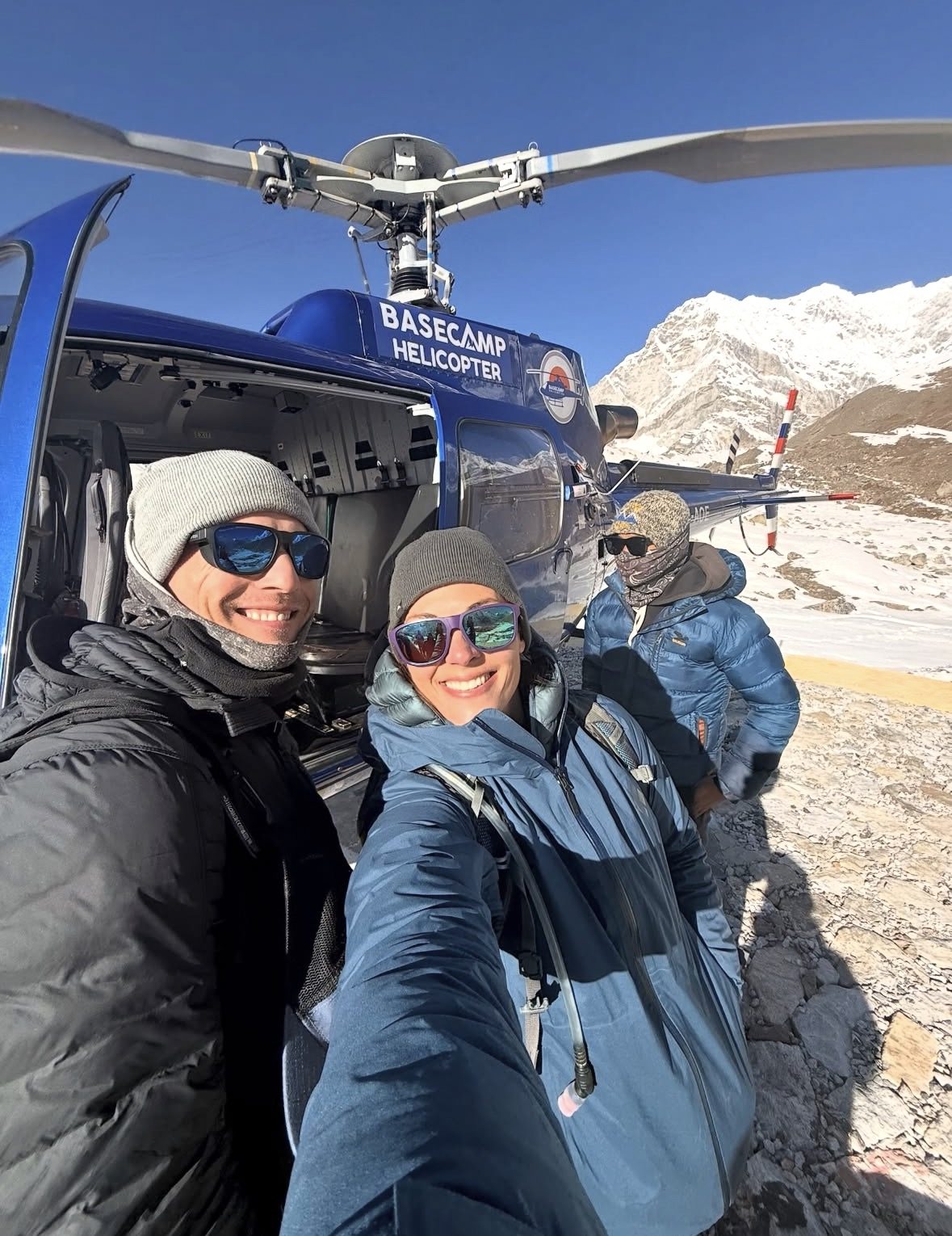
Commercial helicopter tourism to Everest Base Camp emerged meaningfully in the 1990s as Nepal liberalized its aviation sector and private helicopter companies were permitted to operate. Companies such as Simrik Air, Heli Everest, and later Fishtail Air and others received certification from Nepal's Civil Aviation Authority of Nepal (CAAN) to conduct scenic and charter flights into the Khumbu. The tragic 1996 Everest disaster, which claimed eight lives and was later immortalized in Jon Krakauer's book 'Into Thin Air,' paradoxically accelerated global fascination with Everest and spurred demand for accessible ways to experience the mountain without undertaking a full climbing expedition or the grueling 12-to-14-day trek to Base Camp.
The 2000s marked the true commercialization and democratization of Everest Base Camp helicopter tours. Improved rotor technology, particularly high-altitude variants of the Airbus H125 (formerly AS350 B3), enabled more reliable and safer operations at extreme elevations. In 2005, Didier Delsalle of Eurocopter famously landed an AS350 B3 on the summit of Everest at 8,848 metres, demonstrating the extraordinary ceiling of modern helicopter capability. While commercial tour operators do not fly to the summit, this achievement reinforced confidence in high-altitude rotary aviation. Tour packages became increasingly structured, offering standardized itineraries from Kathmandu with a landing at Kala Patthar (5,545 m) or directly at Base Camp, often including a hot breakfast at Everest View Hotel.
Nepal's devastating earthquakes of April and May 2015, which killed nearly 9,000 people and triggered a massive avalanche on Everest that claimed 22 lives at Base Camp, tested the resilience of the entire Himalayan tourism industry. Helicopter operators played a critical humanitarian role during rescue and relief operations, airlifting hundreds of injured trekkers and climbers from remote locations. Following reconstruction and recovery, the government of Nepal and private operators invested significantly in improving infrastructure, safety protocols, and pilot training. The post-2015 rebuilding period effectively modernized the helicopter tourism sector, resulting in a more professional, safety-conscious, and internationally recognized industry that today welcomes travelers from over 100 countries.
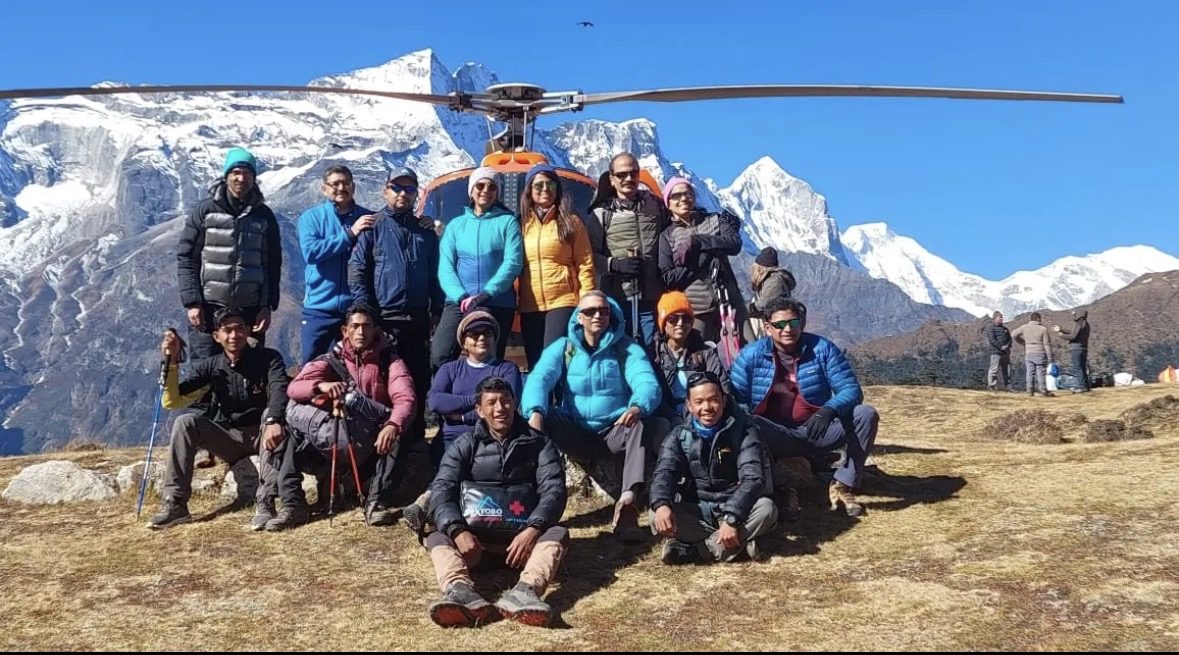
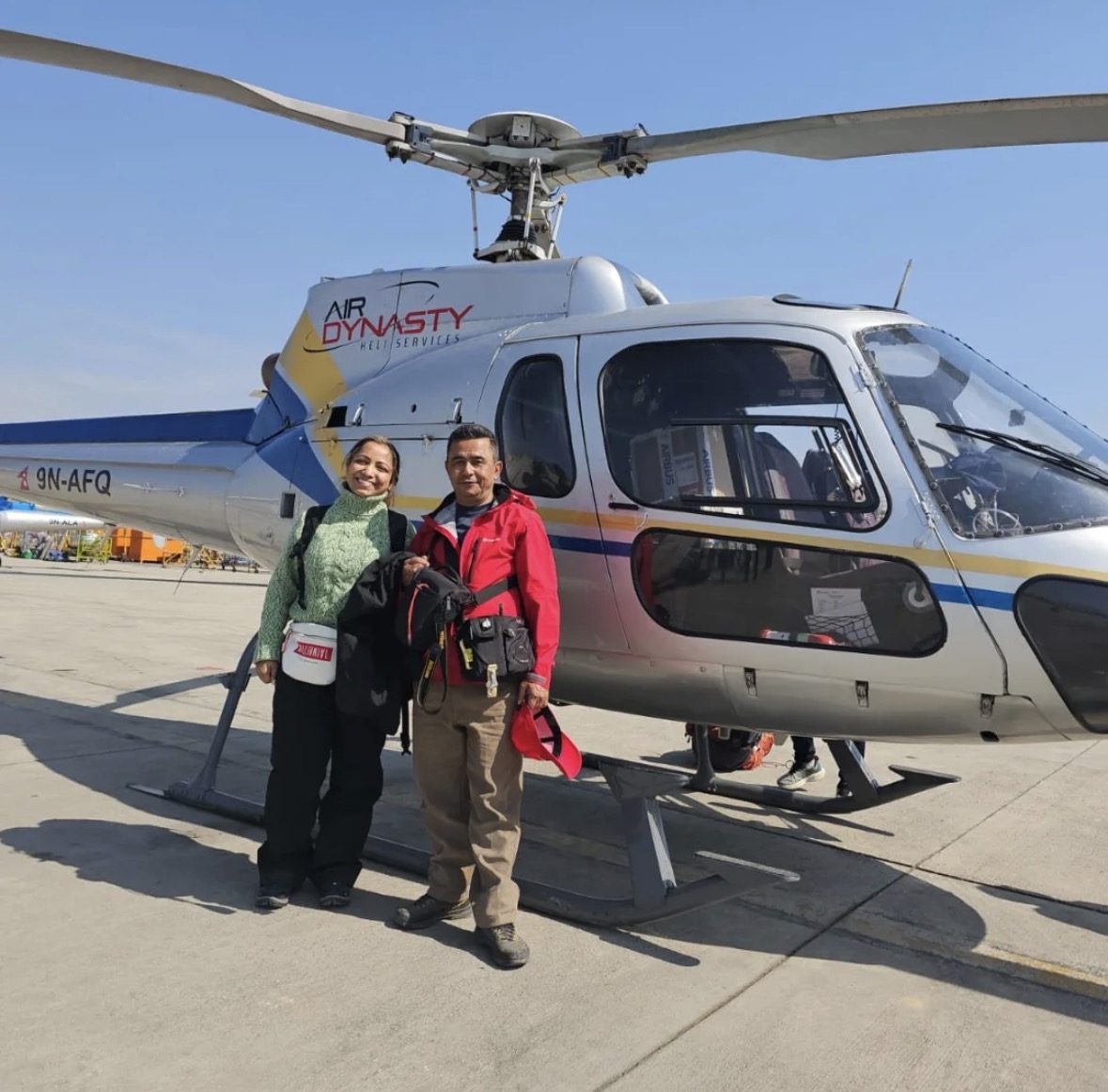
Today, an Everest Base Camp helicopter tour stands as one of the most coveted and accessible luxury adventure experiences on the planet. Departing from Tribhuvan International Airport in Kathmandu or from Tenzing-Hillary Airport in Lukla — itself one of the world's most dramatic airstrips at 2,845 metres — modern tours typically take between four and six hours in total, including the flight, landing time, and return. Passengers board high-altitude certified helicopters, most commonly the Airbus H125, piloted by CAAN-licensed aviators trained in mountain flying. The route sweeps over the Dudh Koshi river valley, passes the storied Namche Bazaar, and delivers travelers to a landscape of glacial moraine, prayer flags, and the soaring white pyramid of Everest itself.
Whether you are a seasoned mountaineer who has trekked the Khumbu multiple times or a first-time visitor with limited days and a boundless sense of wonder, the Everest Base Camp helicopter tour offers an irreplaceable perspective on the highest place on earth. Standing at Base Camp or at the summit-view plateau of Kala Patthar, with the wind carrying the sound of fluttering prayer flags and the glacial silence pressing in from all sides, you become part of a story that stretches back through Hillary and Tenzing, the Sherpa ancestors, and the ancient glaciers themselves. The history you have just read is alive in every stone, every face, and every breath you take at altitude — and your visit adds one more chapter to it.
Ready to Experience It Yourself?
Don't let this once-in-a-lifetime experience remain a dream — our handpicked, CAAN-certified helicopter tour operators offer safe, breathtaking flights to Everest Base Camp departing year-round from Kathmandu. Browse our curated tour packages, compare prices, and secure your seat on the flight of a lifetime. The roof of the world is waiting — and with the right tour, it has never been more within reach.
Book Your Tour Now